
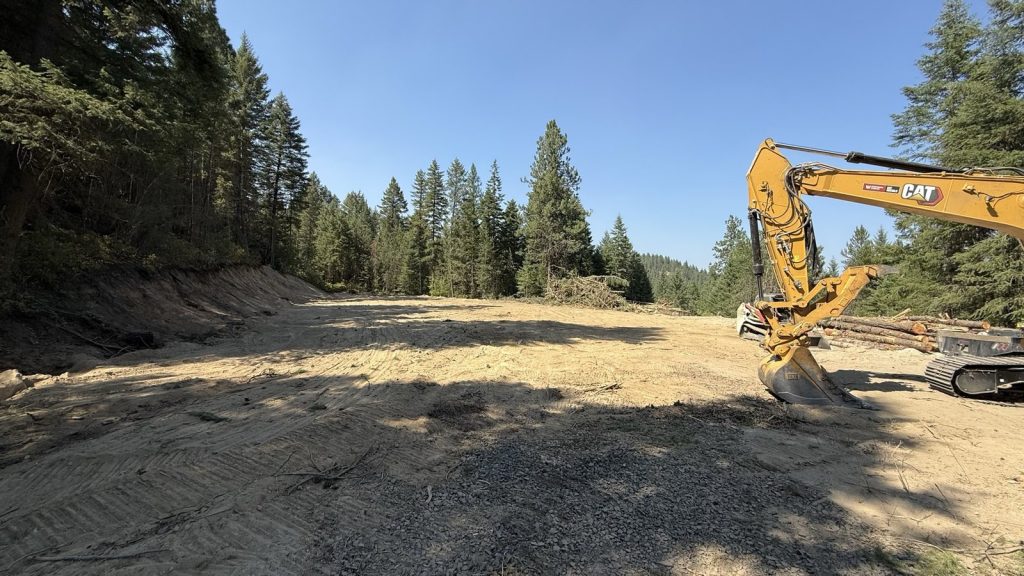
Buying raw land in Bonner County looks simple on the MLS listing. Trees, a view, maybe a rough two-track cut in from the county road. Then you close, walk it in the spring, and realize the driveway floods, there is no power at the corner, the perc test came back slow, and the flat spot you were going to build on is actually the wetland setback.
Full site prep is the work that turns a raw parcel into a buildable site. On a typical Sagle or Sandpoint 5–10 acre lot, that means forestry work, road in, well, septic, house pad, drainage, and utility trenches — usually in that order, and usually before a builder will pour a foundation. This guide walks you through the whole thing, from what to look at while you are still touring properties, through the sequence and 2026 budget you should plan for, to the local wrinkles that catch out-of-area buyers every year.
If you are already under contract or shopping and something on the parcel does not look right, call us at 208-603-4777 or email info@premierlandservice.com. Ty or a project manager from Premier Land Service can meet you on site. Joey also holds an Idaho real estate license, which means we understand both sides of the transaction — the diligence period, the contingency clock, and what a well-written offer looks like on raw land — not just the excavation side.
1. The reality of raw land in North Idaho
Most of the parcels changing hands right now in Sagle, Sandpoint, and the surrounding Bonner County pockets are 5, 10, or 20 acres of forested ground with modest slope, a mix of glacial deposits and bedrock underneath, and a lot of unknowns until you dig.
The buyers we work with are usually one of two types:
- Shopping. Touring listings, trying to figure out which parcel is actually buildable and what it will cost to develop.
- Under contract. Closed or closing soon, needing to plan the sequence, budget, and permits before the builder shows up.
Both need the same information. What follows is the process we walk clients through — the same checklist Joey or a project manager from Premier Land Service uses when we do a site visit.
2. Before you write the offer — the shopping-stage walk
The best time to spend an hour with an excavation contractor is before you sign a purchase agreement. A one-hour walk of a parcel with someone who develops land for a living can save you five and six-figure surprises later.
Work with your own real estate agent for representation. What we can do, because Joey has been through the buying process from both the contractor side and the licensed side, is help you understand what you are actually looking at on the ground and what it will cost to develop before your offer goes in.
We offer two ways to help at this stage. Quick informal walks are what we do most often — you meet us at the parcel, we walk it together, and you leave with a verbal read on the site. Typically free to $500 depending on drive time and depth. For buyers who want more than a gut check — especially on parcels with meaningful money on the line, wetlands, steep ground, questionable access, or unclear utility runs — we also offer a paid site feasibility review that pulls the mapping, checks the county and agency requirements, walks the parcel, and delivers a written report you can use to negotiate the offer or walk away. Feasibility reviews typically run up to $2,500 depending on parcel complexity. Call us at 208-603-4777 to talk through which one fits.
Here is what we are looking at when we walk a parcel with a buyer:
Access. Where does the driveway come off the county road? Is there an existing approach permit, or will you need a new encroachment permit from Bonner County Road and Bridge (208-255-5681) or from ITD (208-265-4312) if the parcel fronts a state highway? How long is the run to a reasonable building envelope? Every extra 100 feet of driveway is real money.
Slope and drainage. Which way does water move across the parcel? Are there wet spots that stay wet into July? Bonner County Title 12, Subchapter 7.2 covers grading, stormwater, and erosion control. Under BCRC 12-722.3, parcels near surface water, on steep ground, or with significant disturbance can trigger a grading/stormwater management plan as part of the building location permit. On the ground, enforcement on rural single-family builds is typically light, but the ordinance is on the books and it is worth knowing where your parcel falls before you close.
Setbacks. In a 5-acre zone, the standard property line setback is 25 feet. Wetlands require a 40-foot setback (reducible to 20 feet for low-quality wetlands under BCRC 12-733). Lakes, sloughs, and ponds require 40 feet from the ordinary high water mark. Rivers and creeks require 75 feet. Lakefront and shoreline work brings additional Idaho Department of Lands and, on some water bodies, federal jurisdiction — confirm what applies to your specific parcel before you plan anything below the ordinary high water mark.
The building envelope. Once you plot setbacks, wetlands, and slope, how much of the parcel is actually flat enough and dry enough to put a house on? A 10-acre parcel with wetlands, slope, and a creek can leave you with a 1-acre buildable pad. A cleaner 5-acre parcel with none of those constraints can give you more usable ground than the 10.
Soils and geology. Bonner County ground is a product of the Missoula Floods and the Purcell Trench ice lobe. Depending on where a parcel sits, you can hit deep glacial outwash sand and gravel, dense glacial till, fine-grained lake sediments, decomposed granite, or solid Belt Supergroup argillite and quartzite bedrock at almost any depth. That variability is the whole story on the well side — see the next section — and it also drives your pad, septic, driveway, and trenching costs. A shallow test hole with a mini excavator during due diligence is one of the highest-ROI things you can do.
Well and septic feasibility. Neighboring well logs give you a first read on likely depth, but you cannot trust them blindly in Bonner County — the geology can change dramatically over a few hundred feet (more on this in the next section). Soils give you a read on likely septic type — gravity, gravity-to-pump, or cap-and-fill are the systems we install most often up here. If the parcel is small, sloped, or has shallow bedrock or a high water table, you need to know before you write an offer, not after.
Utilities. Where is the nearest power pole, and how far is the run to the pad? A short run to an existing pole with easy soils is a few thousand dollars. Long rural extensions across rocky ground can run $20,000 to $35,000 or more. This one line item swings your total budget more than almost anything else. Real numbers from the utility take a formal application and a coordinator visit — they will not commit to a hard quote before that — but a walk of the parcel with someone who has run service to a lot of local builds gets you close enough to plan around.
If you are touring a parcel and any of this feels murky, call us at 208-603-4777. A short walk is cheap. Surprises after closing are not.
3. Under contract — the diligence phase
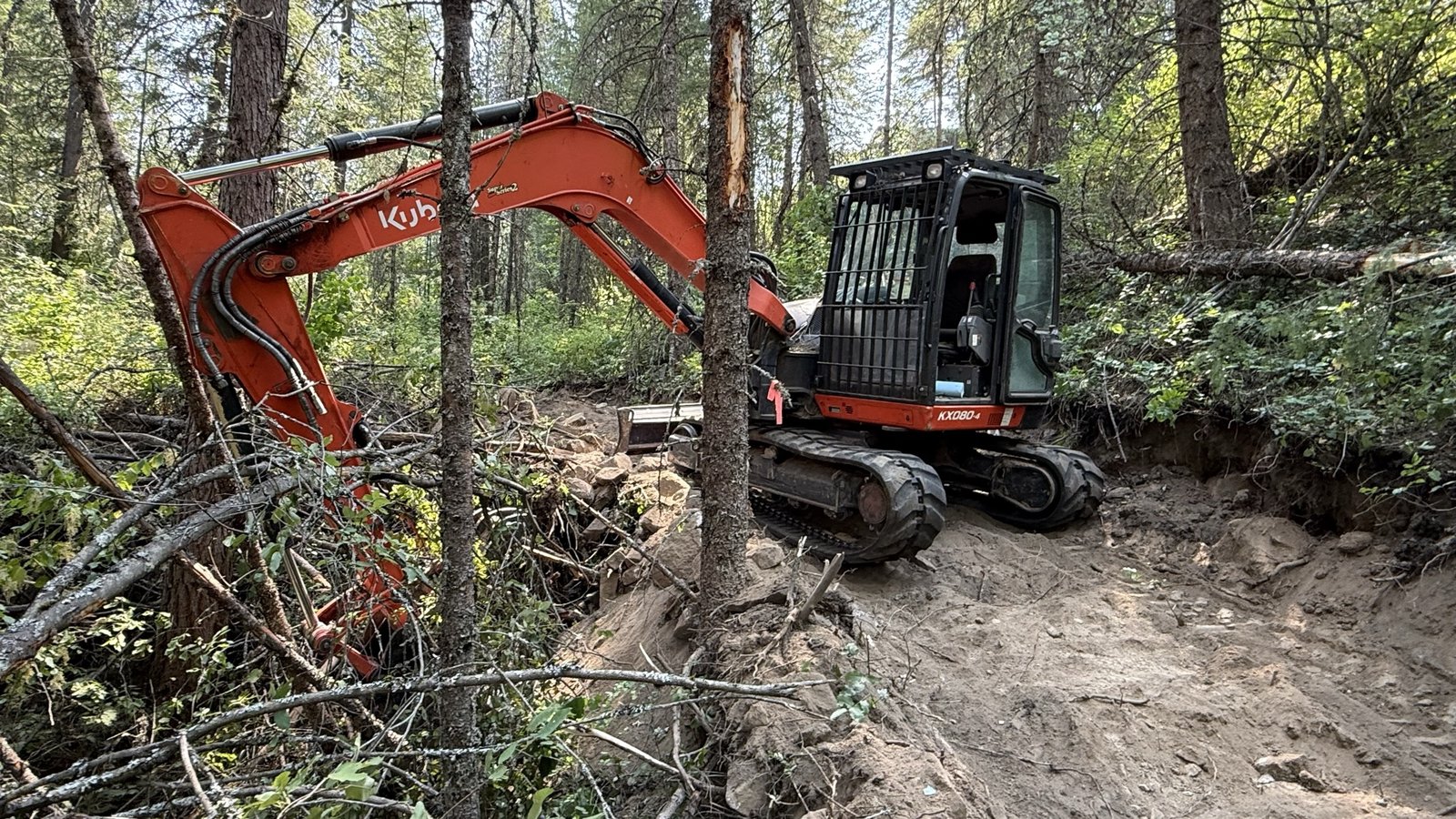
Once you are under contract, the clock starts. Most buyers in this market get 21 to 45 days of inspection and feasibility. Here is what has to happen in that window:
Inspection timeline in the offer. One thing to think about before you even get here: the inspection period you write into your offer directly affects both the strength of the offer and your due diligence room. A tight 10 or 14 day inspection window makes your offer more competitive in a multiple-offer situation, but it can leave you scrambling to get a perc test, a well feasibility read, and a contractor walk done before it expires. A 30 to 45 day window gives you real time to work but weakens the offer. There is no right answer — just do not write the window so short that you cannot actually complete the due diligence, and do not extend it so far that you lose the deal.
Perc test and site evaluation. Panhandle Health District (2101 W. Pine St., Sandpoint, 208-265-6384) does the site evaluation that determines what septic system your soils will accept. This is the single most important inspection during due diligence — it dictates whether you have a gravity system on the low end or an engineered pressure distribution system on the high end.
Well feasibility — with a Bonner County caveat. The Idaho Department of Water Resources domestic well permit is $75 under Idaho Code §42-235. Neighboring well logs are public and searchable through the IDWR well map, and pulling them is always worth doing — but interpret them carefully.
Bonner County sits at the south end of the Purcell Trench, right where the Cordilleran Ice Sheet built the ice dam that periodically failed and released Glacial Lake Missoula in a series of catastrophic outburst floods between roughly 15,000 and 13,000 years ago. What that means on the ground today: layers of glacial outwash gravel, glacial till, fine lacustrine sediments, and post-flood deposits stacked on top of Belt Supergroup metasedimentary bedrock and granitic intrusions. Those layers are not uniform. Bonner County water availability reports show water-bearing units at anywhere from 15 to 600 feet below ground, alluvium thicknesses ranging from 10 feet to almost 400 feet before granitic bedrock, and wells producing from single-digit gpm (fractured bedrock) up into the tens of gpm (alluvial aquifers).
Practically, this means two houses on the same road can have completely different wells. Your neighbor may have a 180-foot alluvial well pumping 20 gpm. You may have a 480-foot fractured-granite well pumping 4 gpm — or vice versa. Pull the neighbor logs, understand the range, and budget for the deeper end unless the local pattern is very consistent.
Timber cruise. If the parcel has merchantable timber, a cruise before closing tells you whether logging can offset your clearing costs. On a 5–10 acre parcel with mature trees, the merchantable value can be several thousand dollars — sometimes enough to pay for the initial road-in and rough clearing.
Easements and title. Read the title report carefully. Access easements, utility easements, and — critically — any recorded conservation easements or CC&Rs can restrict what you build and where. Bonner County has no adopted building codes since 1997, but private CC&Rs and homeowner associations absolutely enforce their own standards.
Setback confirmation. Have your surveyor mark corners and any regulated water features. Your building envelope is only real once it is staked.
Contractor walkthrough. Get whoever is doing your site prep on the ground before your inspection contingency closes. It is the last chance to renegotiate or walk if the site prep budget is going to blow up the deal.
Call us during your inspection window if you need someone who works this ground every day to walk it with you.
4. The build-out sequence
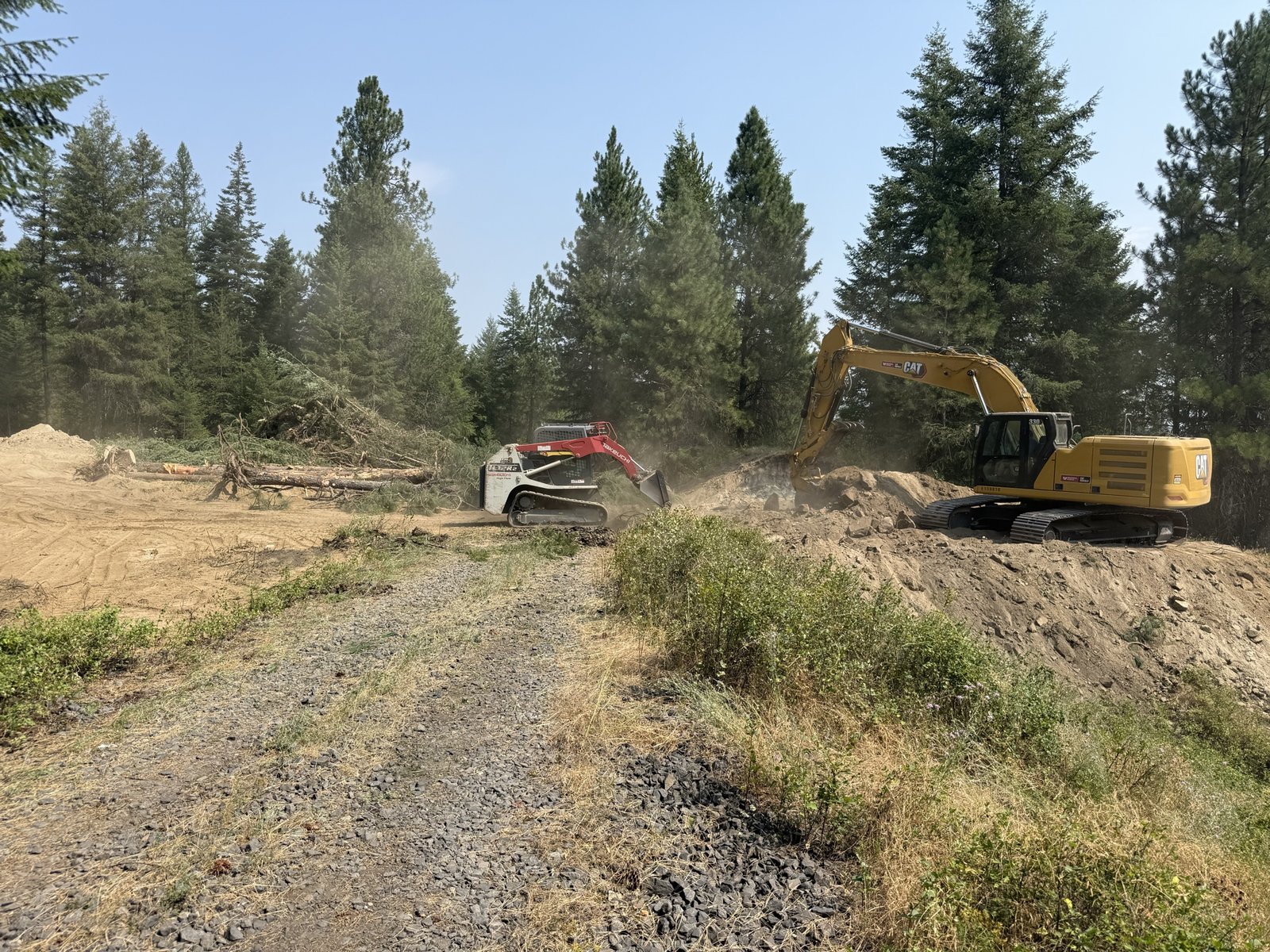
Once you close, the site prep sequence matters. Doing it in the wrong order costs money and time. Here is how we run a typical 5–10 acre buildout:
Step 1 — Forestry work. Trees and brush come down first. Forestry mulching turns standing trees and brush into a mulch layer in place — one machine, one pass, no burn piles, no haul-off. Cost per acre runs $1,500 to $5,000 depending on density. For heavier ground with large-diameter trees and stumps that need to come out completely, traditional land clearing is the right call. We compare the two in detail here. Doing this first opens up the parcel so we can see the ground, stake the driveway alignment through the corridor, and get an accurate look at the pad location before we start moving dirt.
Step 2 — Rough driveway in. Once the corridor is cleared, we cut a working road to the building envelope. Usually pit run base, no top course yet. This lets us move machines, deliver materials, and start the rest of the work. It also locks in the final driveway alignment before any of the more expensive work happens.
Step 3 — Power to the site. Power usually comes early because you need it for the build — tools, temporary service, the well pump once it is set. Filing the application with the utility (Northern Lights, Avista, Kootenai Electric, depending on where you are) kicks off their coordinator visit and design. This one has the longest lead time of anything in the sequence, so start it as soon as you close.
Step 4 — Well drill. With the pad location known and the driveway roughed in, the driller can get to the well site. Drilling runs $28 to $65 per foot in Idaho, and Bonner County wells vary widely — some hit water at 100 to 200 feet in glacial alluvium, others push 400 to 600 feet into fractured granite. Add drilling, casing, pump, pressure tank, storage if needed, hookup, and any water treatment, and complete well systems in this area typically run $20,000 to $40,000. Permit turnaround is one to three weeks; drilling itself is one to seven days; testing and hookup is roughly another week.
Step 5 — House pad, grading, and drainage. Cut and fill to build a flat, compacted, well-drained pad. This is where drainage plans get built into the ground — swales, French drains, roof-drain daylight lines, and any regulated stormwater work. Do this before the foundation, not after.
Step 6 — Septic install. Once Panhandle Health has approved the design and the pad elevations are set, we install the tank and drainfield. Most of the systems we install in Sagle and Sandpoint are gravity, gravity-to-pump, or cap-and-fill. Cap-and-fill does not always require engineered fill — only when a limiting layer forces the drainfield above the native soil. It can sit above grade or slightly below depending on the design. On many jobs septic goes in here, right after the pad. On others it makes more sense to install in tandem with the build, or even near the end, once final elevations, floor heights, and the exact location of the sewer stub are locked in. Doing it too early can force expensive redesigns if the pad elevation shifts. Full detail on Sandpoint and Sagle septic installs is here.
Step 7 — Utility trenches. Water line from well to house, septic drop from house to tank, communications, and the buried power run from the transformer if the service is underground. Trenching in Idaho runs $15 to $35 per linear foot depending on depth and soil. Combine trenches where possible — separating power and water in the same open ditch (with proper spacing) is far cheaper than two trips.
Step 8 — Final driveway, retaining, and landscape grading. Top course of crushed gravel, culverts, ditching, any retaining walls or armoring. Our current North Idaho driveway ranges are here — a standard 300-foot residential driveway runs $8,000 to $18,000.
Step 9 — Building can begin. Foundation goes in. Framing starts. Premier now handles vertical builds on qualifying projects — ask us about the whole package from land to lock-up if that is a fit for your project. Otherwise your builder takes it from here.
The whole sequence, on a straightforward site, takes three to six months of active work spread across a full construction season. Weather, permit timing, and inspection scheduling all add float.
5. Sample 5-acre buildout budget (2026 dollars)
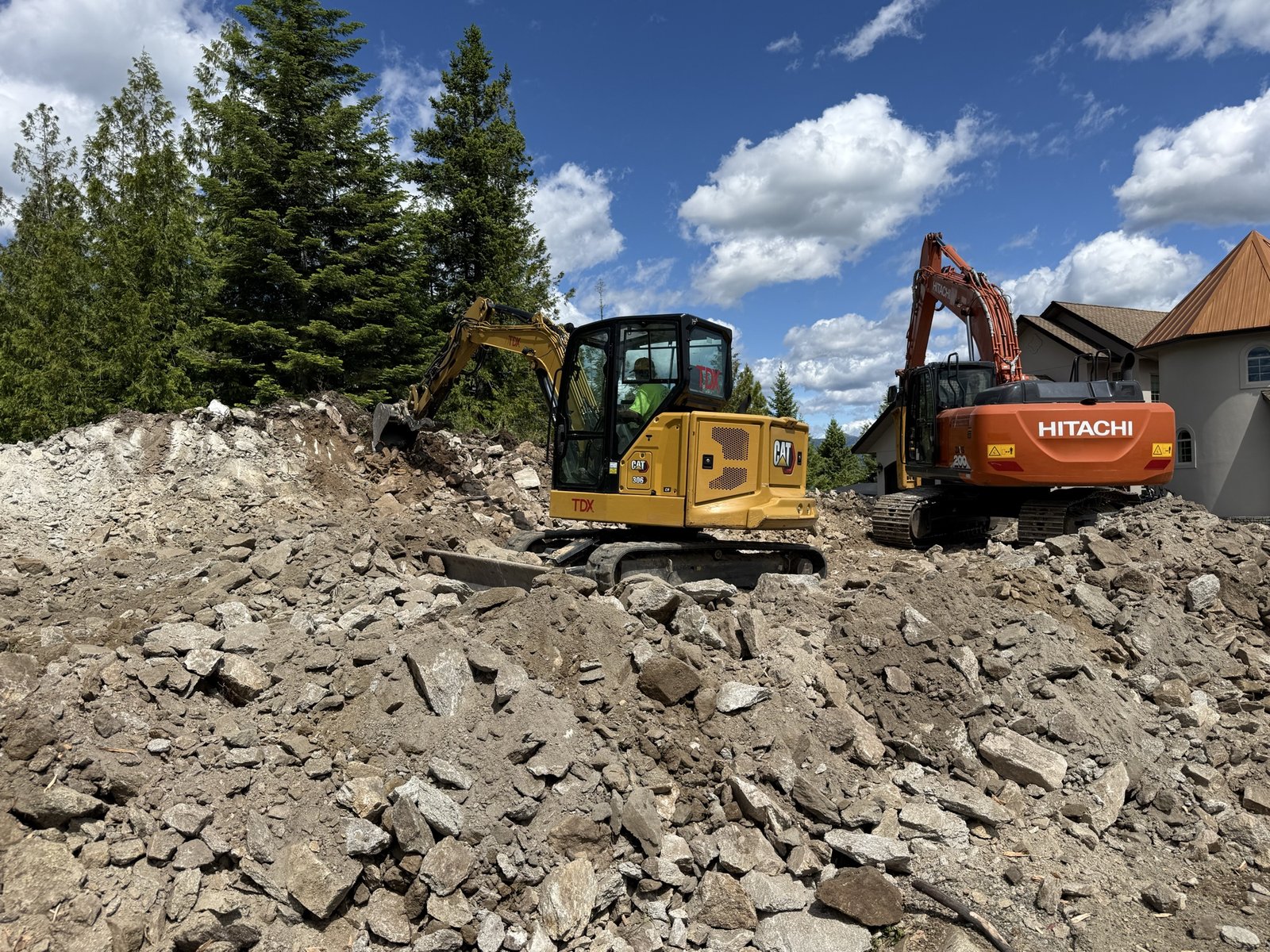
Here is a plausible 2026 budget for a 5-acre parcel in Sagle or Sandpoint with average conditions — some slope, moderate tree cover, decomposed granite soils, existing county road frontage, power at the corner, and a 300-foot driveway to a 1-acre building envelope. Costs go up quickly on rocky, wet, steep, or long-run sites.
| Line item | Typical range | Notes |
|---|---|---|
| Contractor walkthrough during shopping | $0 – $500 | Often free for local buyers |
| Site feasibility review (optional) | Up to $2,500 | For complex parcels or big offers |
| Perc test and site evaluation (Panhandle Health) | $400 – $800 | Fee schedule at idahopublichealth.com |
| Well permit (IDWR domestic) | $75 | Under Idaho Code §42-235 |
| Building Location Permit (Bonner County) | $100 – $300 | Bonner County does not issue building permits |
| Encroachment permit (Road & Bridge or ITD) | $50 – $200 | If new approach needed |
| Forestry mulching (2 acres cleared) | $3,000 – $10,000 | Building envelope + driveway corridor |
| Rough driveway in | $3,000 – $8,000 | Pit run base, no top course yet |
| Complete well system (drill, pump, hookup, treatment) | $20,000 – $40,000 | Depth and geology drive the range |
| Septic install (gravity or gravity-to-pump) | $12,000 – $22,000 | Cap-and-fill adds $8,000 – $15,000 |
| House pad, cut/fill, compaction | $8,000 – $20,000 | Depends on how much dirt moves |
| Drainage — swales, French drain, roof daylight | $3,000 – $10,000 | Grading/erosion control plan usually included |
| Utility trenches (power, water, septic drop) | $4,000 – $12,000 | $15–$35/linear foot |
| Power extension from pole | $3,000 – $20,000 | Huge swing depending on distance |
| Final driveway (300 ft, crushed top, culverts) | $8,000 – $18,000 | Longer or steeper runs cost more |
| Retaining walls, ditching, cleanup | $2,000 – $15,000 | Only if needed |
| Realistic total, average site | $70,000 – $150,000 | Before the foundation goes in |
| Difficult site (rock, wet, long run) | $150,000 – $220,000+ | Not uncommon in North Idaho |
A tight, straightforward parcel with cooperative soils and short utility runs can come in near the bottom of that range. A parcel with rock, a deep well, a long power extension, engineered septic, and a 1,000-foot driveway can easily push past the top.
Get real numbers before you close. A walkthrough plus a phone call to Panhandle Health and Bonner County Planning costs almost nothing and saves people six figures every year.
6. Timeline reality check
The other question we get constantly: how long does this take?
- Due diligence (perc, well feasibility, timber cruise, title): 3 to 6 weeks
- Permits (Panhandle Health septic, IDWR well, Building Location, encroachment): 2 to 8 weeks, overlapping
- Rough driveway to pad complete: 2 to 6 weeks of active work
- Well drilled, tested, and hooked up: 4 to 8 weeks
- Septic installed and inspected: 2 to 4 weeks
- Utility trenching and power set: 2 to 6 weeks, depending on utility scheduling
- Total from closing to foundation-ready: 3 to 6 months for a smooth project, longer if permits stack or weather closes ground
North Idaho ground freezes. We can work through most winters, but excavation slows, gravel pits close on the coldest days, and pouring concrete gets expensive. If you close in fall, plan for the pad and driveway to happen in spring. If you close in spring, you can usually get everything done and be ready for foundation the same year.
7. Local wrinkles
A few things that specifically catch out-of-area buyers in Bonner County:
No building codes, but plenty of rules. Bonner County has not adopted building codes since 1997 — the county issues a Building Location Permit that verifies zoning, setbacks, and location, not construction quality. That does not mean anything goes. Panhandle Health enforces septic and well rules. IDWR enforces water rights. Bonner County Planning enforces zoning, setbacks, subdivision, and stormwater. Private CC&Rs enforce whatever the developer wrote in.
Panhandle Health is the gatekeeper. Nothing gets built without their septic sign-off. Their site evaluators are busy, especially April through October. Get on the calendar early.
Wetlands are common and often not obvious. A lot of parcels in Sagle, Sandpoint, and the surrounding areas have seasonal wetlands that are dry in summer and wet in spring. The 40-foot setback applies either way. Walking a parcel in July can be misleading — bring someone who has seen it wet.
Winter shuts down some work. Gravel pit deliveries, concrete pours, and septic installations all get harder or impossible in deep winter. Not a reason to avoid winter closings, just something to build into the timeline.
8. Why one contractor for the whole package
Some clients hire separate contractors for clearing, road, well, septic, pad, and utilities. It works, but it usually costs more and takes longer. Reasons we push clients toward a single contractor for the whole package:
- Sequencing. The driveway has to be in before the driller. The pad has to be planned before the septic. Utility trenches need to align with the driveway and the drainage plan. One crew that owns the sequence does not sit waiting for another crew to finish.
- Machine mobilization. Moving an excavator, dozer, mulcher, and dump truck onto a rural site costs money every time. Doing all the excavation-adjacent work in one mobilization saves real dollars.
- Accountability. When something needs to be fixed, one company owns it. No finger-pointing between the septic contractor and the pad guy about whose grade caused the water problem.
- Communication. One estimate, one schedule, one point of contact. The builder shows up to a foundation-ready pad instead of coordinating four different subcontractors.
We are set up to run the whole package — road, forestry, well coordination, septic, pad, drainage, utility trenches, final driveway — from due diligence through foundation-ready.
9. FAQ
Do I need a building permit in Bonner County? No. Bonner County has not adopted building codes since 1997. You need a Building Location Permit that verifies zoning and setbacks, plus Panhandle Health approval for septic and well. Building code compliance is on you and your builder.
How long from closing to foundation-ready? Three to six months for an average parcel with cooperative permits and weather. Longer if you close going into winter or hit unexpected soil, water, or setback issues.
Can I do some of this work myself? Some of it. Rough tree removal, brush cutting, and even minor grading can be done owner-direct. Septic install, well drilling, and any regulated stormwater work require licensed contractors.
What if the perc test comes back bad? Sometimes we can move the drainfield location to better soils on the parcel. Sometimes it means an engineered system — pressure distribution, mound, or ATU — which adds cost. Rarely, the parcel is not septic-viable at all, which is why you do the perc test before your inspection contingency closes.
Does forestry mulching work for a 5-acre parcel? Yes, especially for building envelope prep, driveway corridors, and defensible space. It leaves the mulch in place, keeps the soil covered, and does not require haul-off. For total ground clearance with stumps out, traditional clearing is the right call.
How do I get a real quote instead of a range? A site walk and a scope conversation. Once we know the parcel, the building envelope, and the utility runs, we can put actual numbers on paper.
10. Next step
Two ways to work with us on your buildout:
Still shopping. If you are touring parcels and want a second set of eyes on what a site prep budget looks like, call 208-603-4777 or email info@premierlandservice.com. Joey or a project manager from Premier Land Service can meet you on site for a quick walk.
Under contract or closed. Send us the parcel address and the closing date. We will get on the calendar for a full site walk during your inspection window (if you still have one) or as soon as you close. If your inspection contingency is still open and there is real money on the line, ask about the site feasibility review — it gives you a written record of what the parcel needs, what it will cost, and what could go wrong, before you release contingencies. From there we can put together a real scope and quote for the full package — road, forestry, well coordination, septic, pad, drainage, utilities, and final driveway — through foundation-ready.
We work Sagle and Sandpoint first, Bonner County across the board, and we take projects in Kootenai and Boundary counties. If it is on our ground, we can help.