
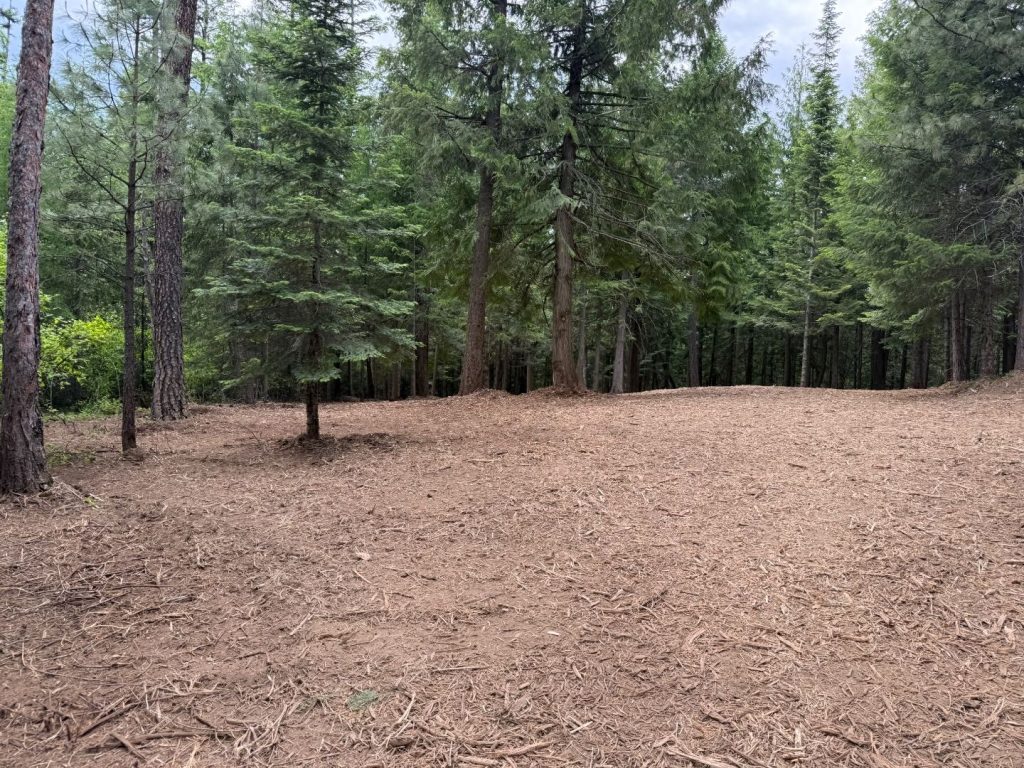
If you own land in North Idaho and you’re staring at a tangle of brush, dead pines, or overgrown undergrowth, you’ve probably wondered what it actually costs to clean it up. Forestry mulching is the most efficient way to clear land in our terrain, and the question we get more than any other at Premier Land Service is simple: “How much per acre?”
The honest answer: it depends on your land. But after running our mulchers across hundreds of acres in Bonner, Kootenai, and Boundary counties, we can give you real numbers you can plan around. Here’s what forestry mulching costs in North Idaho in 2026, what drives the price, and how to get the most value out of every dollar.
Quick Answer: Forestry Mulching Cost Per Acre in North Idaho
For most properties in Sagle, Sandpoint, Athol, Spirit Lake, and surrounding areas, forestry mulching runs $1,800 to $4,500 per acre in 2026. Here’s how that range typically breaks down:
- Light brush and small trees (under 4″ diameter): $1,800–$2,400 per acre
- Moderate growth with mixed tree sizes (4″–8″): $2,400–$3,200 per acre
- Heavy growth, dense forest, or larger trees (8″+): $3,200–$4,500 per acre
- Steep terrain, rocky ground, or limited access: Add 15–30%
Most jobs we run in Bonner County land in the $2,400–$3,200 range. Flatter ground comes in lower. Steeper, rockier terrain — common on hillside lots near Sandpoint, around Lake Pend Oreille, and on properties tucked into the Selkirks and Cabinets foothills — pushes costs higher.
What Drives Forestry Mulching Pricing
Five factors do most of the heavy lifting on price:
1. Terrain and Access
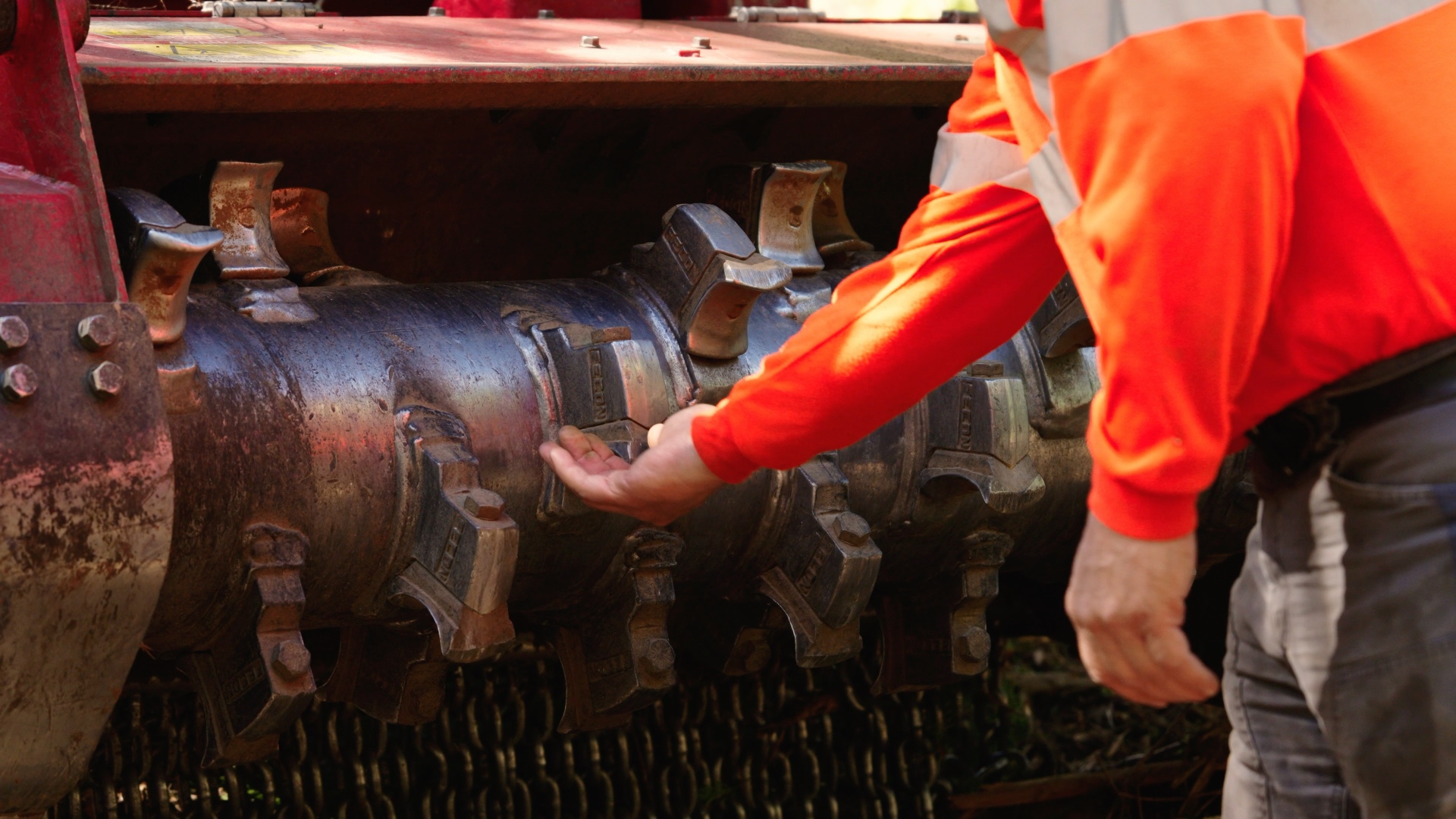
In North Idaho, terrain is the biggest cost driver we see. Steep slopes force the mulcher to work cautiously, which cuts production rate. Rocky ground — common in the Selkirks and Cabinets foothills — wears teeth faster and slows the cut. Limited access (long driveways, soft ground, gates we can’t get equipment through) adds mobilization time. We always factor this in before quoting, and we’ve worked on enough North Idaho terrain to know what we’re walking into.
2. Density of Vegetation
Right behind terrain, density does the heavy lifting on price. A property that’s been neglected for 20 years takes 3–4 times longer to mulch than one that’s seen recent attention. Density isn’t just trees — it’s the brush, blowdowns, and slash on the ground that the mulcher has to grind through. We do a site walk before quoting because density is hard to estimate from a satellite image.
3. Tree Size
Our equipment handles trees up to 10″ in diameter efficiently. Larger trees can still be mulched, but production rate drops significantly — sometimes from 1 acre per day down to a quarter acre per day. If your property has a lot of mature ponderosa, lodgepole, or fir over 10″, we’ll typically suggest a hybrid approach: drop and remove the largest trees, then mulch everything else.
4. Acreage Size
Bigger jobs are cheaper per acre. A 10-acre clear typically costs less per acre than a 2-acre clear because mobilization and setup costs get spread across more ground. If you have a small lot, expect to be at the higher end of the range. If you have multiple lots near each other, ask us about combined pricing.
5. Finish Quality
Some clients want a fine mulch finish suitable for lawn installation or building. Others just want defensible space and don’t care if the mulch is coarse. A finer finish takes more passes, which adds time. We’ll ask what you’re trying to accomplish so we can match the finish to your goal.
Why Forestry Mulching Beats Traditional Clearing
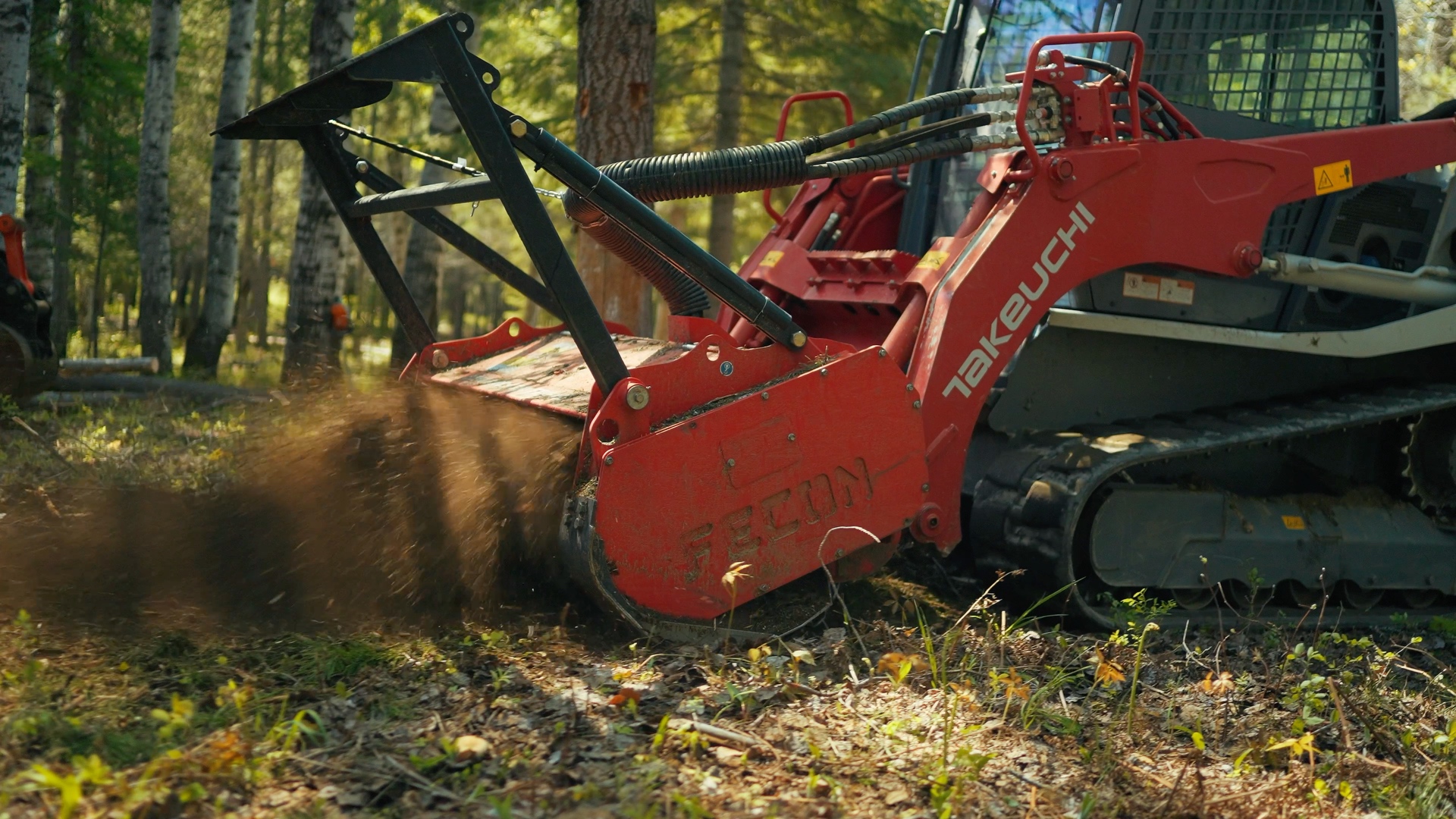
Traditional land clearing — bulldozing, burning, or hauling — costs more, takes longer, and leaves your land in worse shape. Here’s why most North Idaho property owners are moving to mulching:
- One machine, one pass. No dozers, no excavators, no burn piles, no hauling. The mulched material stays on site as a natural mulch layer.
- No soil disturbance. Mulching preserves the root mat and topsoil. After a bulldozer, you’ve got exposed dirt that erodes the first time it rains.
- No burn permits or smoke management. Idaho’s burn windows are narrow and getting narrower. Mulching sidesteps the issue entirely.
- The mulch suppresses regrowth. A thick layer of mulch shades out new brush and helps the land recover naturally.
- Faster turnaround. A typical mulch job is done in days, not weeks.
We cover the full comparison in our forestry mulching service page if you want to dig deeper into what the process looks like.
Hidden Costs to Watch For
Some contractors quote low and add fees on the back end. Here’s what to ask about before you sign:
- Mobilization: What’s the charge to bring equipment to your site? On remote properties this can be $300–$800. We include it in our quotes.
- Stump grinding: Mulching doesn’t grind stumps below grade. If you need a buildable surface, you’ll need separate stump grinding or excavation. Plan for $50–$150 per stump or ask about acre rates.
- Slash removal: If trees were cut before we arrived, the slash piles take extra time. We’ll quote them separately or ask you to clear them first.
- Damage waivers: Some operators won’t go near outbuildings, fences, or septic. We will, but we ask you to flag them so we can work around them carefully.
How to Save Money on Your Mulching Job
- Schedule in shoulder seasons. Late fall and early spring are often cheaper than peak summer because demand is lower. Ground conditions in winter can also be ideal — frozen soil means no rutting.
- Clear the easy stuff yourself first. If you can knock down small brush with a hand saw or pull deadwood off the property, we don’t have to bill for it.
- Combine services. If you’re also doing excavation, road work, or a septic install, bundling jobs saves on mobilization.
- Be realistic about finish. If you don’t need a fine finish, don’t pay for one.
- Get the quote in person. Phone quotes are guesses. A site walk pins down the real number — usually in your favor.
What a Premier Land Service Quote Includes
When we quote a forestry mulching job, you get:
- A site walk with you, on your property, before any commitment
- A written scope: what we’ll clear, what we won’t, finish quality, timeline
- A fixed price — not “up to” pricing — so you know exactly what you’ll pay
- Proof of insurance and licensing
- Photos and progress updates during the job
We’ve been mulching properties across Sagle, Sandpoint, Athol, Spirit Lake, and Priest River for years. We know what each area’s terrain demands.
Frequently Asked Questions
How long does forestry mulching take?
For most North Idaho properties, expect 0.5 to 1.5 acres per day depending on density. A typical 5-acre clear is done in 4–7 working days.
Will mulching kill my desirable trees?
No. We mark and work around trees you want to keep. Selective clearing is a core part of what we do — most clients want to thin, not strip.
Do I need a permit to clear land in Bonner or Kootenai County?
For most private residential clearing, no permit is required. If you’re inside city limits (Sandpoint, Coeur d’Alene), in a sensitive shoreline zone, or doing commercial development, check with the county planning department first. We can help you figure out what applies.
What time of year is best for mulching?
Late fall through early spring is ideal — cooler weather, frozen or firm ground, fewer fire restrictions. Summer works too, but we monitor fire conditions closely and may pause during red flag warnings.
Do you serve areas outside Bonner County?
Yes. We regularly work in Kootenai County (Athol, Spirit Lake, Hayden, Coeur d’Alene), Boundary County (Bonners Ferry, Moyie Springs), and across Bonner County (Sagle, Sandpoint, Priest River, Hope, Clark Fork). See our full service areas page.
Get a Real Number for Your Property
The cost ranges above will get you in the ballpark. To get a real, written quote you can plan around, we need to see your property. Site walks are free, take about 30 minutes, and you’ll have a firm number within 48 hours.
Call us at 208-603-4777, email info@premierlandservice.com, or request an estimate online. Ty handles most of our scheduling and can usually get a site walk on the calendar within a week.