
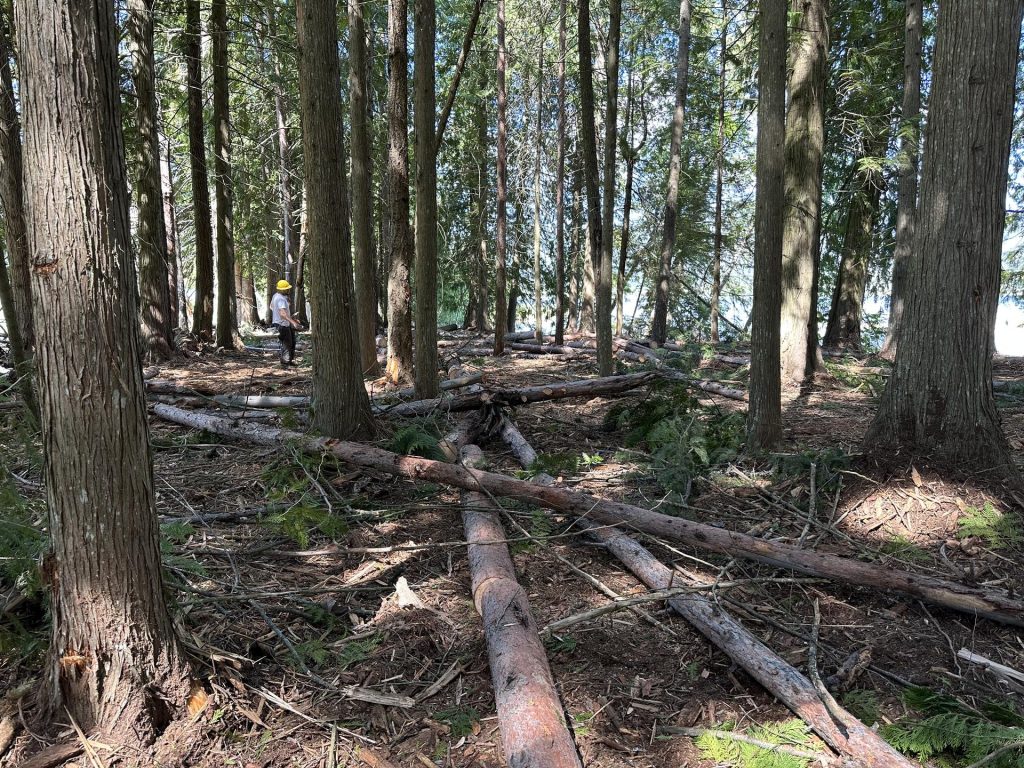
Slash piles are common on wooded property throughout Bonner County. They may be left from logging, thinning, storm damage, defensible space work, or trees that were cut years ago but never cleaned up.
Whether the debris is piled beside a driveway or scattered across several acres, the question is the same: what is the practical way to get it cleaned up? The answer depends on the material, access, and what you want to use the ground for afterward.
Premier Land Service is booking winter slash cleanup in Sagle, Sandpoint, and throughout Bonner County. Depending on the material and the property, we can sort and burn it, mulch suitable material, haul it away, or combine those methods.
Premier Land Service handles the full job. We sort the material, complete the selected treatment, and clean up the site afterward.
What counts as slash?
Slash is woody debris left after trees or brush have been cut or damaged. Common examples include:
- Tree tops and limbs left after logging
- Brush and small trees removed during thinning
- Blowdown and broken trees from storms
- Old burn piles that were never completed
- Debris left after hazard tree removal
- Limbs and brush removed for defensible space
- Cull logs and rotten wood that cannot be used as firewood
Some properties have one clean pile. Others have material scattered through the woods, buried in brush, or pushed together with dirt, rocks, wire, and stumps. The condition of the material affects how it should be handled.
Why winter is a good time for slash cleanup
We are scheduling slash cleanup through the winter. A site visit lets us recommend a treatment method and plan the work around suitable conditions.
Idaho’s normal closed fire season runs from May 10 through October 20, when the state fire safety permit requirement applies to slash burning outside city limits; current restrictions and any extensions must still be checked (Idaho Department of Lands). For a winter job, we check the requirements for the location and the conditions before proceeding.
That does not mean every winter day is a burn day. Wind, ground conditions, nearby structures, surrounding timber, and air quality still matter. The Idaho Department of Environmental Quality can prohibit outdoor burning during an air quality advisory, including advisories caused by winter inversions (Idaho DEQ).
We evaluate the site and the conditions before lighting. If conditions are not right, we wait or use another treatment method.
Option 1: Sort and burn
For a property with room for suitable pile locations, sorting and burning is one option to consider. We evaluate the material, access, nearby improvements, and surrounding trees before recommending it.
We do not simply push the material into a pile and leave the burn to the property owner. Premier carries the burn from start to finish.
The work includes sorting and piling the material, carrying out the burn, and cleaning up afterward. We define the cleanup scope in the estimate so you know what is included and what the finished area will look like.
Burning works best on rural property with enough room to place piles away from structures, valuable trees, overhead lines, and neighboring improvements. Smoke and nearby homes also need to be considered.
Option 2: Sort and mulch
Forestry mulching is useful when burning is not a good fit or when the property owner wants the material processed without smoke.
A mulching head can process brush, limbs, tree tops, and smaller woody material. The resulting mulch stays on the property and helps cover exposed soil.
Mulching may be the better choice when:
- Slash is spread across a larger area
- Material is mixed with standing brush
- Piles are too close to trees or improvements to burn safely
- Smoke would create a problem for nearby homes
- The owner wants the area opened up and usable
Large logs, heavy root balls, and piles containing a lot of rock or dirt may need to be separated first. Some of that material may be better burned or hauled.
Option 3: Sort and haul
Hauling removes the material from the property entirely.
The estimate needs to account for loading, transportation, and disposal. Hauling is worth considering for smaller properties, sites near town, or locations where neither burning nor mulching fits the owner’s plans.
Hauling may also be used for the portion of a pile that cannot be burned or mulched efficiently. A mixed plan often gives the property owner the cleanest result without paying to haul every piece.
Many properties need more than one method
Slash cleanup does not have to be all burn, all mulch, or all haul.
On one property, we may burn the clean limbs and tops, mulch scattered brush around the pile, and haul large logs or contaminated debris. Selecting the right method for each part of the job can lower cost and produce a better finished site.
The first step is identifying:
- What the piles contain
- How much material is present
- Whether equipment can reach it
- Where a burn pile could be placed
- How close the work is to structures, roads, utilities, and neighboring property
- What the owner wants the area to look like afterward
Slash cleanup and wildfire risk
If an insurance company has asked you to address vegetation or debris, bring its written requirements to the site visit. We can discuss the requested work with you, but coverage decisions remain with your insurer.
Our North Idaho wildfire insurance article covers questions to discuss with your insurance agent. Slash cleanup should not be presented as a guarantee of coverage or a lower premium.
What happens during a site visit
Joey or a project manager from Premier Land Service will walk the property with you. We will look at the amount and type of material, equipment access, pile locations, nearby improvements, and the cleanup result you want.
Then we will recommend one of four approaches:
- Sort and burn
- Sort and mulch
- Load and haul
- Use a combination of the three
The estimate will define what Premier is handling. If burning is included, Premier carries the burn and completes the agreed cleanup afterward.
Book winter slash cleanup now
Premier Land Service is scheduling winter slash cleanup in Sagle, Sandpoint, and throughout Bonner County. We also take selected projects in Kootenai and Boundary counties.
If you have logging debris, storm damage, old burn piles, brush, or tree tops that need to be cleaned up, call 208-603-4777 or email info@premierlandservice.com.
We will walk the property, explain the practical options, and provide a clear scope for getting it cleaned up.