
Fire Fuels Reduction and Defensible Space in Sandpoint, Sagle, Athol, and North Idaho
Defensible space, fire-fuel reduction, and wildfire mitigation across Sandpoint, Sagle, Athol, and Bonner, Kootenai, and Boundary counties.
Fire fuels reduction — a real plan for a real risk.
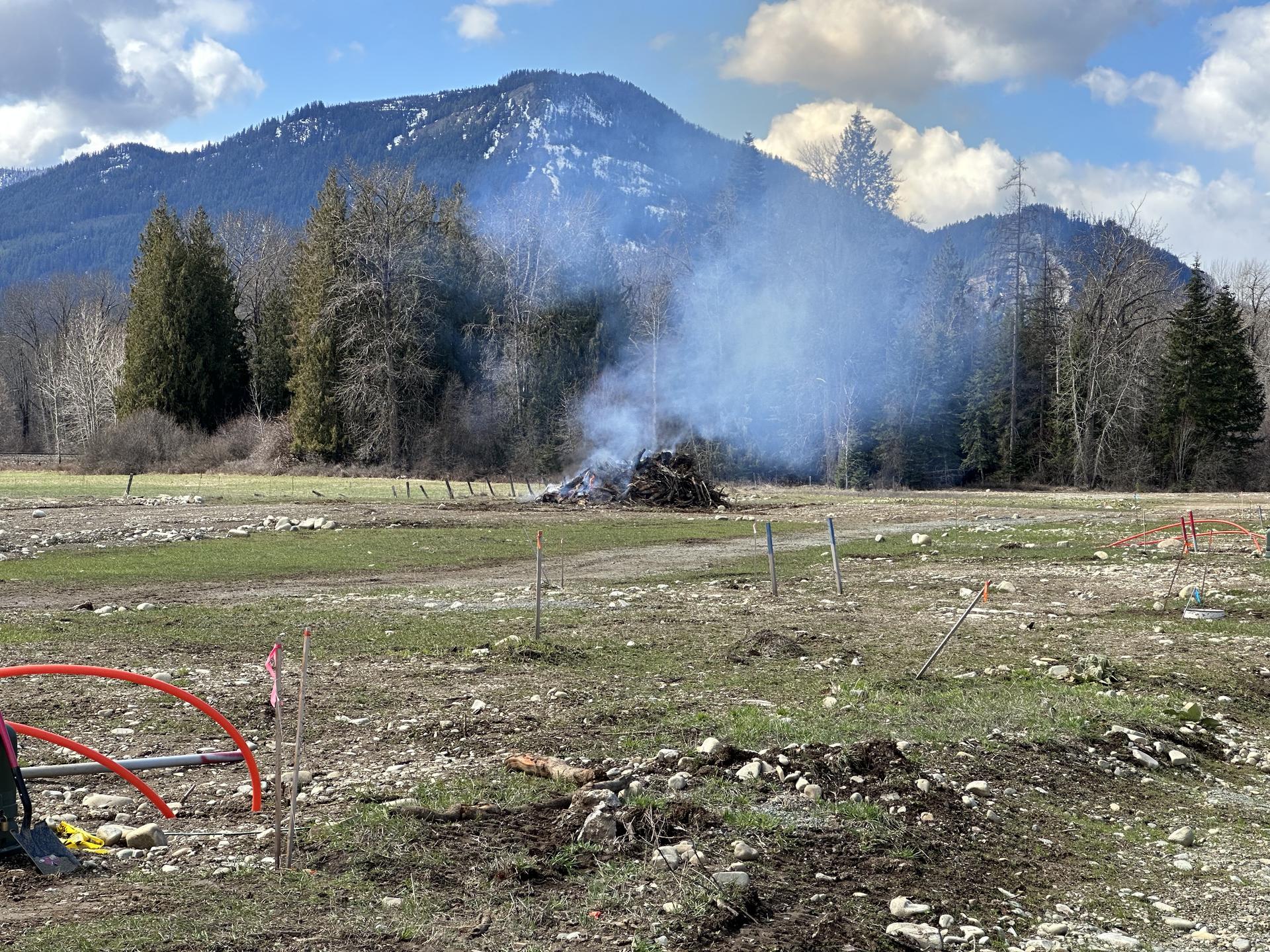
Wildfires are a fact of life in North Idaho. We build and carry out a fire fuels reduction plan that gives your home and property the best chance to survive one. Our project managers walk the land with you, assess the real fire hazards — ladder fuels, dead-down, dog-hair thickets, overhanging limbs, continuous brush — and recommend the right course of action before it’s too late.
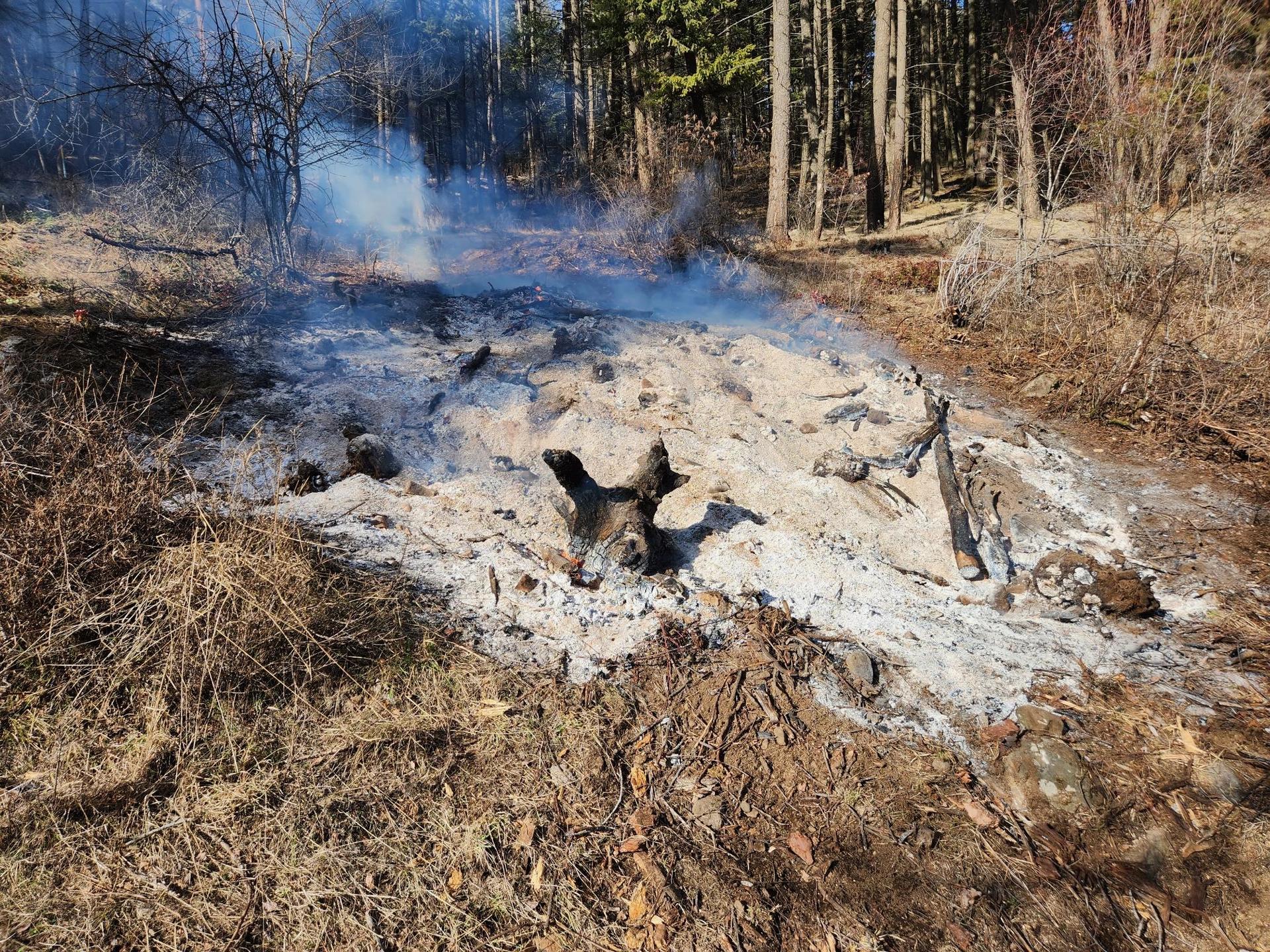
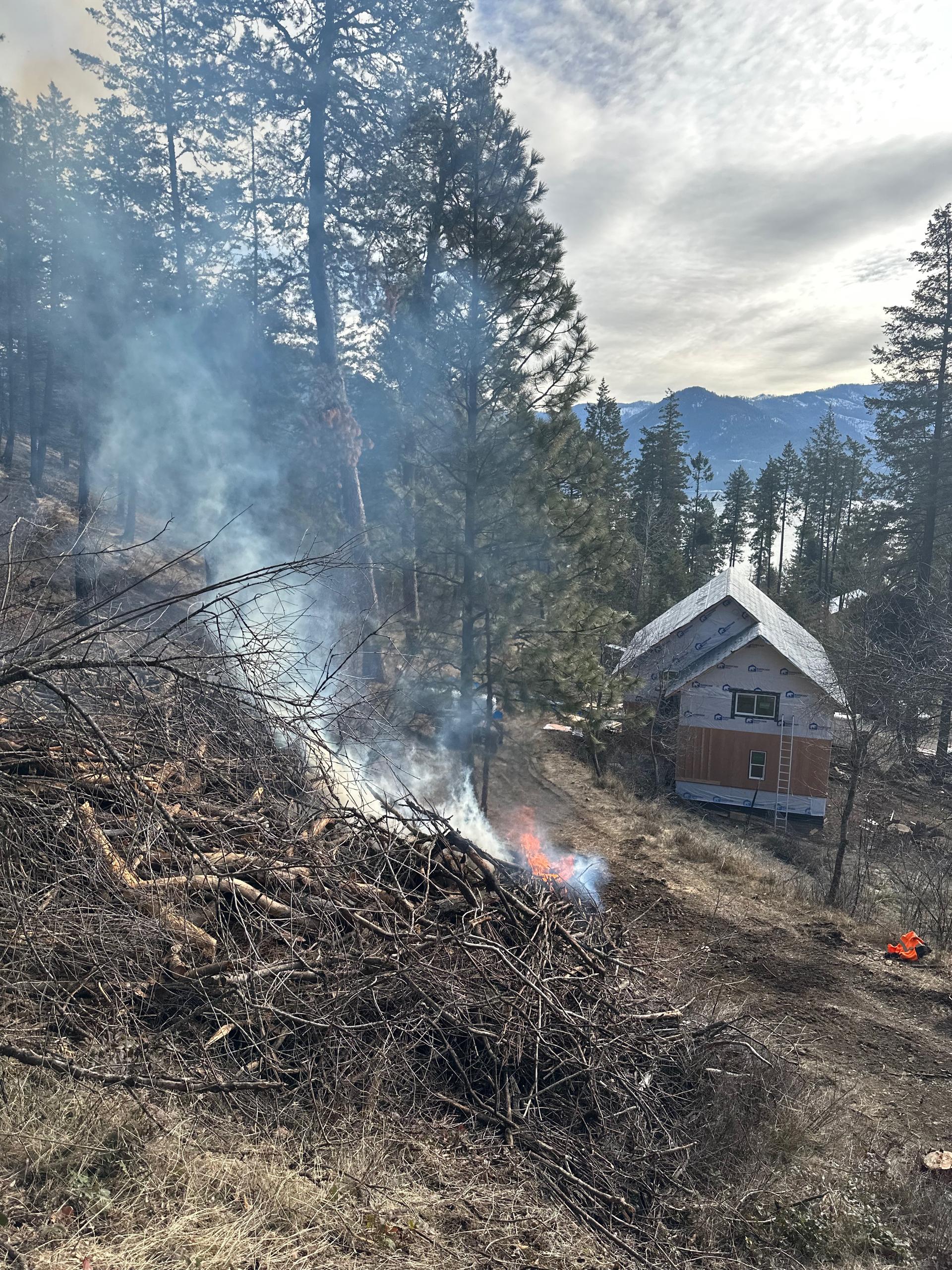
That usually means clearing the 30–100 ft defensible space zones around structures, thinning the canopy to break up fire paths, removing ladder fuels so a ground fire can’t climb into the crowns, and preparing firebreaks on the property edges. We do it with a forestry mulcher wherever possible — leaves the soil structure intact, no burn piles, no smoke, no permit delays.
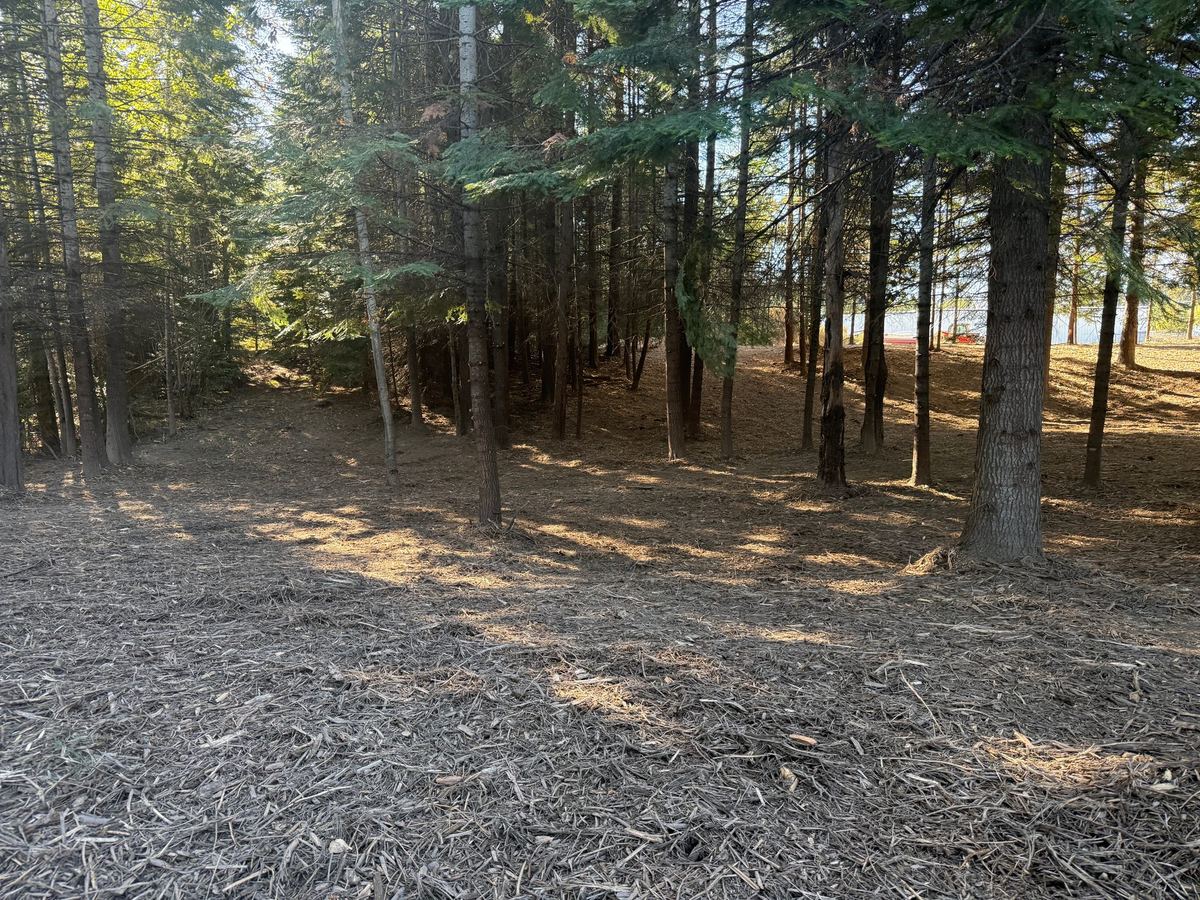
Get money back for merchantable timber.
When we clear fire fuels or reduce a stand, any merchantable logs we pull off your property can be sold — and that revenue gets credited back to your invoice. On the right site, the timber sale covers a meaningful chunk of the clearing cost. Sometimes all of it.
How the rebate works
- We identify merchantable timber during the site walk — typically sound conifer above a minimum diameter.
- If the volume makes sense, we broker the logs to a local mill and apply the net proceeds to your invoice as a rebate.
- You see the timber value on your quote up front — no surprises, no hidden margin.
- If there’s no merchantable timber, we tell you straight. Not every property qualifies.
Ask about the timber rebate when you call — we’ll flag it during the estimate.
A 90-second look at how we work.
Family-owned and operated in North Idaho. Licensed, bonded, insured — and Joey walks every job himself.
Four steps from first call to finished work.
No games, no mystery pricing, no “we’ll see when we get there”. Here’s how every Premier job runs.
Walk the land
We come out, walk the property with you, and understand what you’re trying to get done. Free, no pressure.
Straight quote
You get a written quote with scope, timeline, and price — in days, not weeks. No bait-and-switch.
Do the work
We show up when we said we would and run the job with our own crew and equipment. You stay informed.
Walk it again
Final walk-through. If something isn’t right, we fix it before we invoice. That’s our guarantee.
A complete fire fuels reduction plan.
Wildfire risk assessment
We walk the property and identify the real hazards — ladder fuels, dead-down, continuous brush, canopy connectivity.
Defensible space — 30 to 100 ft
Clear the immediate, intermediate, and extended zones around your home per Idaho Firewise guidance.
Firebreaks & fuel breaks
Cleared strips on property edges and ridgelines that slow fire spread and give crews a place to stand.
Ladder fuel removal
Limbing up, thinning undergrowth, and pulling deadfall so a ground fire can’t climb into the canopy.
Timber rebate when it applies
Merchantable logs sold to a local mill and credited back to your invoice. Real money, no surprises.
Mulch-in-place, no burn piles
Forestry mulcher turns fuels into ground-cover mulch. No smoke, no permit delays, no piles sitting for months.
If any of this sounds familiar, call.
A plan, a crew, and a rebate.
Owner-walked assessments
Owner-walked assessments. The person who’ll run the work looks at your land before we quote — not a salesman.
Mulcher-first, not burn-first
Mulcher-first approach. Less smoke, less burn risk, no piles waiting for a permit window. Soil stays intact.
Timber rebates where they apply
Timber rebate when it applies. Real dollars credited back for merchantable logs — so your fire protection partly pays for itself.
Ballpark pricing — starting ranges.
Fire fuels reduction is priced like forestry work, usually by the acre. Your number depends on density, slope, access, and how heavy the ladder fuels are.
Starting Range
before any timber rebate — merchantable logs reduce the final invoice
Get your exact quoteEvery project is unique. These are starting ranges — actual quotes depend on site conditions, scope, access, and any applicable timber rebate. Call for a free on-site estimate: (208) 603-4777.
Fire fuels reduction — answered.
What is a fire fuels reduction plan?
It’s a site-specific plan for removing the vegetation most likely to carry a wildfire to your home. We walk the property, identify ladder fuels, dead-down, canopy continuity, and structure exposure, and prescribe the clearing work that gives you the best chance in a fire event.
What is defensible space?
It’s the treated area around a structure designed to slow or stop a wildfire before it reaches the home. Idaho Firewise guidance splits it into three zones — 0–5 ft (immediate), 5–30 ft (intermediate), and 30–100 ft (extended). We can treat all three.
Can I really get money back for timber?
Sometimes, yes. If your property has merchantable conifer above minimum diameter, we can sell those logs to a local mill and credit the net proceeds back against your invoice. We’ll tell you straight during the estimate whether there’s real timber value or not — not every site has it.
Do I need permits?
For mulching-based fire fuels reduction on private land, usually not. If the scope includes commercial timber harvest or work near waterways, we’ll advise on any notifications needed with Idaho Department of Lands.
When is the best time of year to do this?
Before fire season — late fall through spring is ideal, when ground is firm and fire risk is low. We do work into summer as conditions allow. Don’t wait until smoke is in the air; by then the crews are booked and the forest is at high risk.
Often paired with forestry work.
Forestry Mulching
Our core tool for fire fuels reduction — trees, brush, and undergrowth reduced to ground-cover mulch in place.
See details →Land Clearing
Full tree removal, stump grinding, and construction-ready clearing — with the same timber rebate on qualifying sites.
See details →Brush Removal
Fence lines, pastures, and overgrown fields — cleared without taking the trees you want to keep.
See details →Let’s build your fire fuels plan.
Free on-site wildfire risk assessment. Straight quote within two business days — including any timber rebate that applies to your property. Call, email, or drop your info and we’ll follow up the same day.
Photo Gallery